
Near-Catastrophe in California Sparks Urgent BLEVE Alert
Orange County BLEVE Threat: A Sobering Safety Reminder
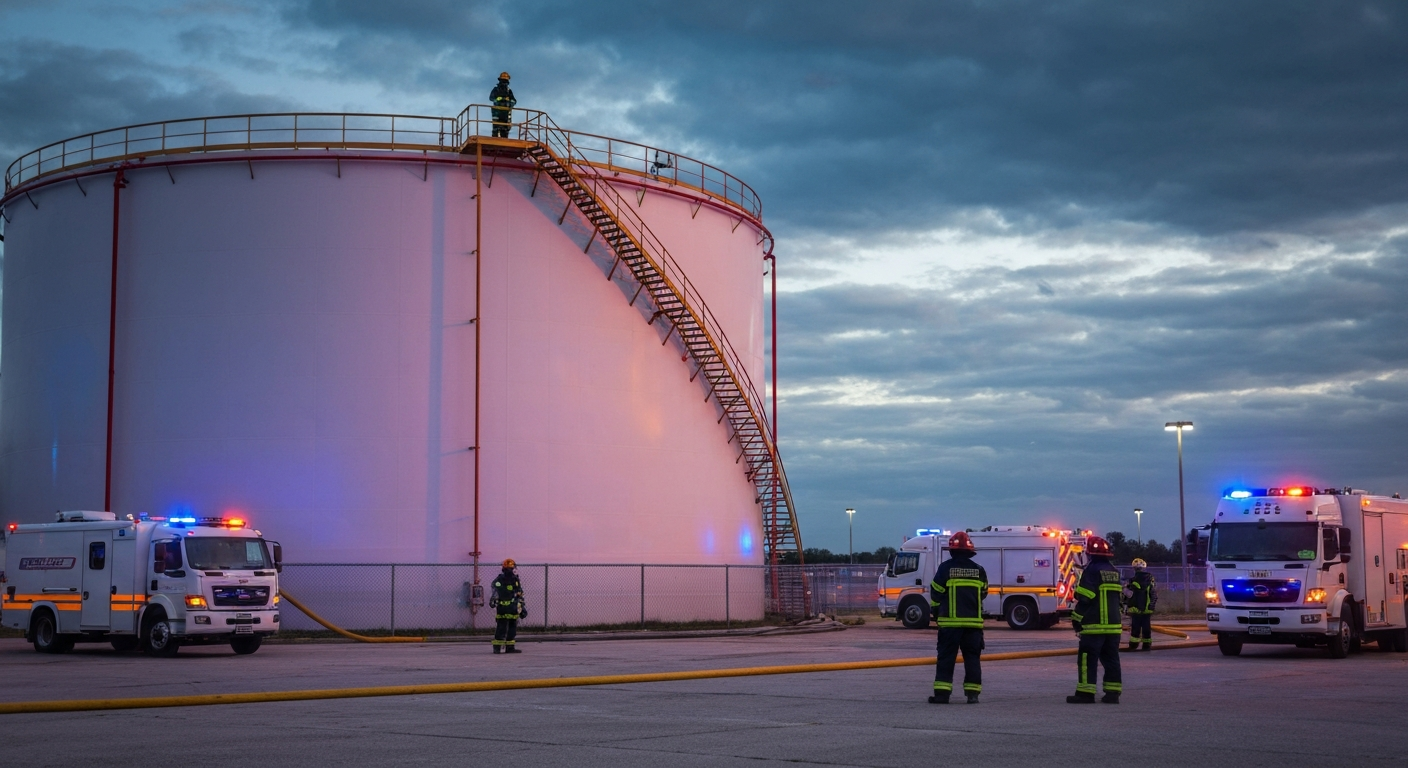
A chemical tank in Orange County, CA, threatened a BLEVE, leading to widespread evacuations and highlighting severe risks. This near-miss underscores the absolute necessity of strict safety compliance and preparedness for all fuel handlers, including the propane industry.
The Situation
A chemical leak in Orange County, California, escalated into a potential Boiling Liquid Expanding Vapor Explosion (BLEVE) scenario this week, forcing mass evacuations. The incident, involving a toxic chemical tank, served as a stark reminder of the devastating potential of such events and the critical importance of robust safety protocols in any hazardous material handling.
The Facts
Orange County emergency services confirmed a critical chemical leak and tank instability this week, fearing a BLEVE event. Officials displayed blast zone maps, illustrating the catastrophic impact if the tank failed. Craig Covey, an Orange County Fire Authority division chief, noted the tank began to bulge and reached the 'boiling liquid expanding vapor explosion' threshold.
Understanding BLEVE Risks A BLEVE is a rupture of a vessel containing a liquid heated to above its boiling point at atmospheric pressure, releasing a large amount of vapor. This can trigger a massive explosion and fire. While this incident involved a chemical, the physics are similar to propane, making it a critical lesson for our industry. Interim Orange County Fire Chief TJ McGovern confirmed an 'all-night mission' to determine if the 'BLEVE threat has been eliminated' after a crack was discovered.
Business Impact
For propane delivery companies, this event is a critical reminder of the liability and operational risks associated with tank handling. Non-compliance with safety regulations like NFPA 58 can lead to catastrophic incidents, immense financial penalties, and devastating loss of life. Investing in rigorous inspection, maintenance, and training programs is not just good practice—it's existential. The costs of proactive safety measures pale in comparison to the fallout from a single major incident.
Key Data Points
- Orange County, CA chemical tank reached 'boiling liquid expanding vapor explosion' threshold.
- Officials displayed blast zone maps and urged thousands to evacuate.
- Interim OC Fire Chief stated an 'all-night mission' to eliminate BLEVE threat.
- BLEVE incidents involve rapid vaporization leading to massive explosions.
Key Takeaways
- Rigorous tank inspection and maintenance are non-negotiable for preventing catastrophic failures.
- Emergency response plans for BLEVE scenarios must be current, practiced, and understood by all personnel.
- The Orange County event demonstrates that even non-propane hazardous material incidents highlight universal safety principles applicable to our industry.
Action Steps
- 1.Review and update all NFPA 58 compliance records and inspection protocols this week.
- 2.Conduct an immediate internal audit of all storage tank integrity and maintenance logs.
- 3.Reinforce BLEVE awareness and emergency response training with all field and plant personnel.
Competitive Advantage
Companies prioritizing safety with robust, verifiable documentation systems gain an undeniable competitive edge. Proactive investment in safety technology like propanesafetypro.com mitigates risk, protects assets, and assures customers and insurers of your commitment to excellence, differentiating you from less diligent competitors.
What immediate, tangible steps is your company taking this week to ensure your tanks and personnel are protected against a similar critical incident?
Get the next one in your inbox.
Free propane industry news, twice a week. 32,000+ operators already read it.
No spam, unsubscribe anytime. We'll email you a link to confirm — that's how we keep the list real. See our privacy policy.