
Technology, Equipment & Innovation
Field Guide: Prevent Propane Leaks at the Tank
Stop Tank Incidents: Crucial Pre-Checks for Every Service Call
Executive Summary
Accidental propane leaks from tank changes and failures led to recent fires. Service techs must execute rigorous pre-checks and leak tests to prevent costly incidents and ensure public safety.
The Situation
Recent incidents, including a devastating fire in Wells Beach, Maine, and a multi-home explosion in Pennsylvania, serve as stark reminders: even routine propane tank service carries significant risk. Investigators linked these events to propane leaks and ignition, underscoring that meticulous pre-checks are non-negotiable. For every service technician, each connection, every valve, and every tank swap is a potential hazard if proper protocols aren't followed precisely.
The Facts
Inspect Before You Connect Before opening any valves or making connections, conduct a thorough visual inspection of the tank. Look for visible damage, excessive rust, or compromised fittings. Ensure the tank is properly secured and level on its pad. This quick visual sweep can catch issues before they escalate. Remember, an ounce of prevention is worth a pound of cure, especially with something as volatile as propane.
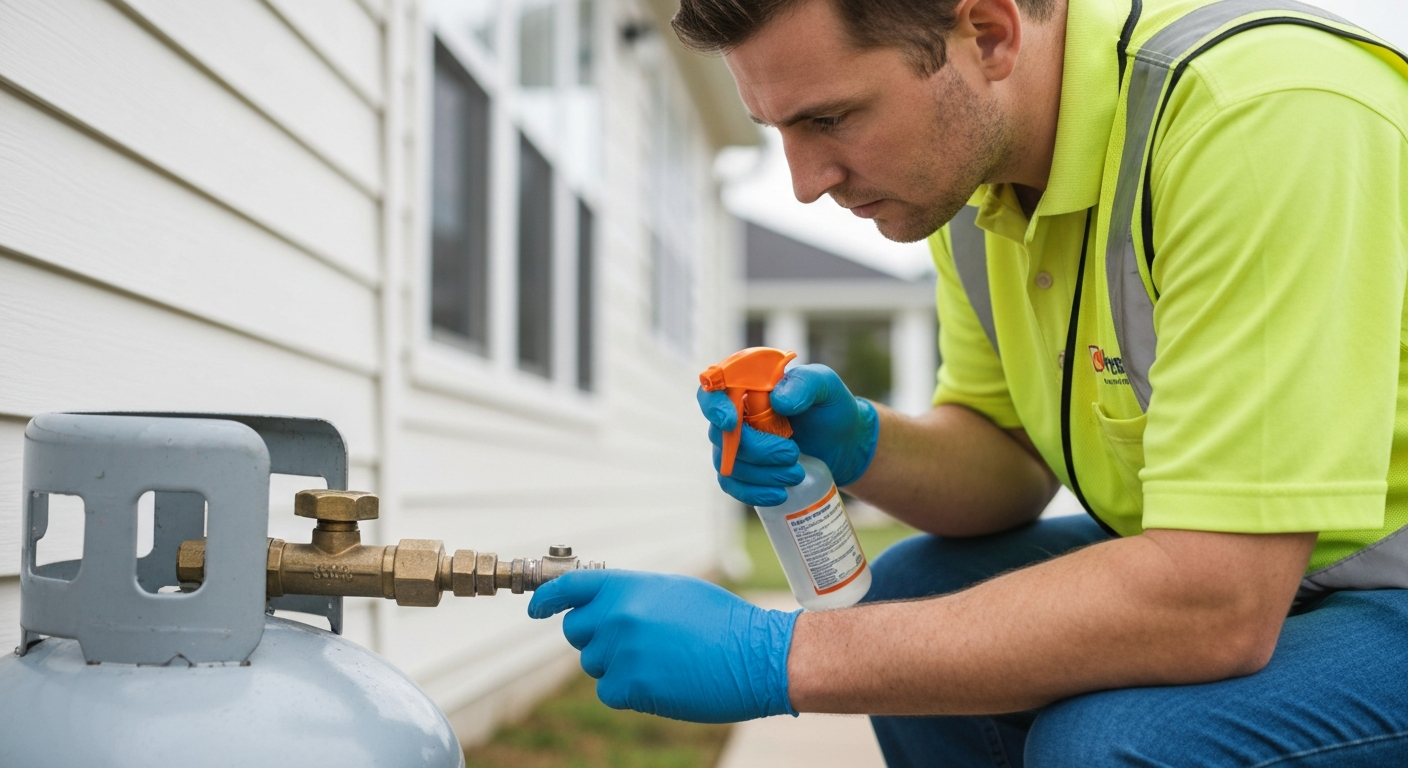
The Leak Test Protocol Once connections are made, a comprehensive leak test is mandatory. Apply an approved leak detection solution to all threaded connections, valve stems, and regulator outlets. Bubbles mean trouble – even the smallest ones. Do not rush this critical step. It's the final line of defense against a costly call-back, property damage, or worse. The recent Pennsylvania incident, where a 100-pound cylinder failure ignited, demonstrates how quickly a small leak can turn catastrophic.
Business Impact
Each propane incident can cost a company hundreds of thousands in property damage, legal fees, and increased insurance premiums. The Wells Beach fire destroyed a home. The Pennsylvania explosion burned three. Beyond the direct financial hit, there’s significant reputation damage. A single accident can erode customer trust for years. Proper pre-checks and leak testing aren't just about safety; they're about protecting your balance sheet and ensuring your business's long-term viability.
Key Data Points
- Wells Beach, Maine, fire caused by accidental propane tank explosion.
- Pennsylvania explosion: 3 homes burned after 100-pound cylinder failure.
- NFPA standards require leak testing at every new connection.
- Liability claims often trace back to procedural failures during service.
Key Takeaways
- Always conduct visual inspections for tank integrity and secure placement before any service.
- Every new connection or tank swap requires a comprehensive leak detection test.
- Document all pre-checks and leak tests for compliance and liability protection.
- Regular training on proper tank handling and leak detection protocols is mandatory for all service techs.
Action Steps
- 1Review and reinforce your company’s tank installation and change-out checklists with every technician.
- 2Ensure all service vehicles are stocked with fresh leak detection solution and proper PPE.
- 3Implement a mandatory 'two-person check' for high-risk tank installations or complex systems.
- 4Utilize digital forms for all pre-checks and leak tests to create an indisputable record, like those available through tankspotter.com.
Competitive Advantage
Companies that prioritize rigorous safety protocols, especially around tank servicing, build unparalleled trust with customers and significantly minimize risk. This commitment to 'doing it right' differentiates them from competitors, reduces insurance premiums, and protects against costly litigation, ensuring long-term operational stability and growth.
What’s one pre-check step that saves you the most headaches on a routine tank service call?
Get the next one in your inbox.
Free propane industry news, twice a week. 32,000+ operators already read it.
No spam, unsubscribe anytime. We'll email you a link to confirm — that's how we keep the list real. See our privacy policy.