
Supply, Pricing & Markets
National Propane Averages Masking Regional Price Shock
Propane Prices: National Average Hides Local Pain
Executive Summary
EIA reports a $2.67/gallon national average for residential propane, but this hides significant regional price volatility. Local factors, not national inventories, often determine an owner's true cost and margin. Owners must analyze regional data to protect profitability.
The Situation
The EIA reports national average residential propane prices hovering around $2.67 per gallon. For many propane company owners, that figure feels disconnected from their daily reality. Regional market dynamics, transportation bottlenecks, and localized demand patterns can drive significant price disparities, impacting margins and challenging pre-buy strategies. Understanding these local fluctuations is key to profitable operations, especially outside the traditional heating season.
The Facts
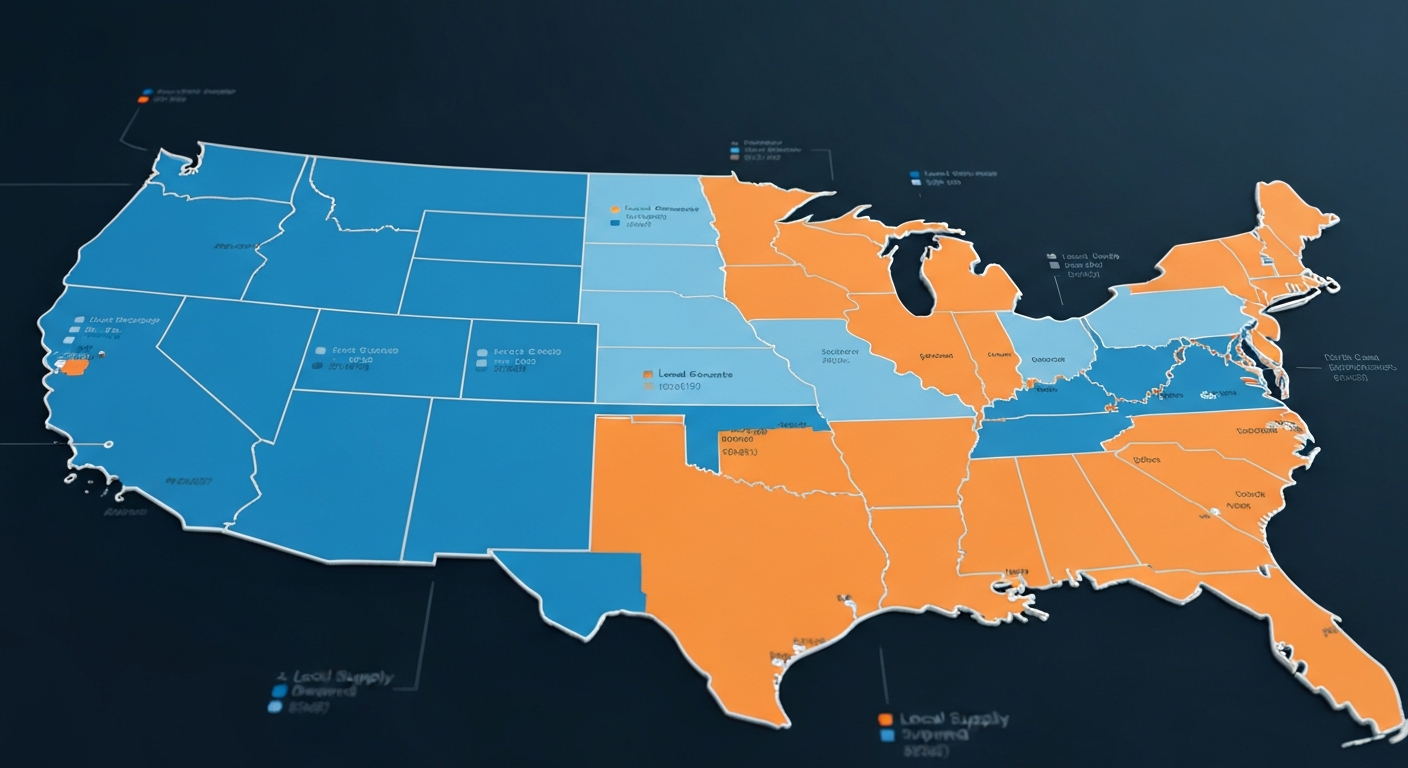
EIA Averages vs. Your Dock Price According to the EIA, the U.S. average residential propane price for the week ending March 30, 2026, was $2.67 per gallon. This national number, while useful for macro trends, often doesn't reflect the price a bobtail operator paid at the rack in Nebraska ($1.64) versus one in Florida ($4.71). These figures, from PropaneCostPerGallon.com, highlight a spread of over $3.00, demonstrating that 'average' can be a misleading term for businesses operating in specific markets. Even with stable national inventories, localized issues can spike costs.
Regional Disruptions & Infrastructure While national supply metrics might look good, stable supply doesn't always guarantee stable markets. Reports from Propane Insider confirm that transportation constraints, infrastructure limitations, and unique regional demand can create dramatically different conditions. A pipeline disruption or railcar shortage in one area can tighten supply and drive up prices, even if storage facilities elsewhere are full. Operators need to look beyond national headlines and dive into their specific regional market reports to make informed purchasing decisions.
Business Impact
For owners, relying solely on national averages can lead to missed opportunities or unexpected margin compression. A $0.10 per gallon differential on a 10,000-gallon delivery can mean $1,000 in lost profit if not managed. Understanding direct regional costs allows for more accurate pricing, better pre-buy decisions, and smarter hedging strategies. It directly impacts the bottom line, affecting cash flow and the ability to reinvest in the business.
Key Data Points
- U.S. average residential propane price (March 30, 2026): $2.67/gallon.
- Regional price range: $1.64/gallon (Nebraska) to $4.71/gallon (Florida).
- Over $3.00/gallon difference between lowest and highest regional prices.
- Regional market conditions, not just national inventories, drive local pricing.
- A $0.10/gallon miss on 10,000 gallons equates to $1,000 in lost margin.
Key Takeaways
- National propane price averages often obscure significant regional volatility, impacting local profitability.
- Transportation bottlenecks and local demand patterns can create supply tightness irrespective of national inventories.
- Accurate regional market data is essential for making informed purchasing, pricing, and hedging decisions.
- A proactive approach to market analysis protects margins and ensures competitive pricing for customers.
Action Steps
- 1Review your own regional price data against national averages weekly.
- 2Analyze local infrastructure reports for potential supply disruptions.
- 3Adjust pricing strategies to reflect true regional costs, not just national benchmarks.
- 4Explore diverse supply options to mitigate regional price spikes.
Competitive Advantage
Companies that dig deeper than national averages, using real-time regional data to inform their buying and selling, will consistently outperform. This detailed market intelligence allows for agile pricing and supply chain management, offering a competitive edge and better customer value. It's about working smarter, not just harder, in a dynamic market.
How often do you compare your local propane costs to the national average, and what's the biggest discrepancy you've seen?
Get the next one in your inbox.
Free propane industry news, twice a week. 32,000+ operators already read it.
No spam, unsubscribe anytime. We'll email you a link to confirm — that's how we keep the list real. See our privacy policy.