Market & Pricing
Global NGL Markets Hint at Stable Propane Supply, But Regional Price Swings Persist
Propane Pricing & Supply: Stability in a Volatile World
Executive Summary
Domestic propane production is robust, balancing global NGL market fluctuations for overall stable supply. Regional price differences persist, highlighting the need for localized market awareness and flexible pricing strategies for propane retailers.
The Situation
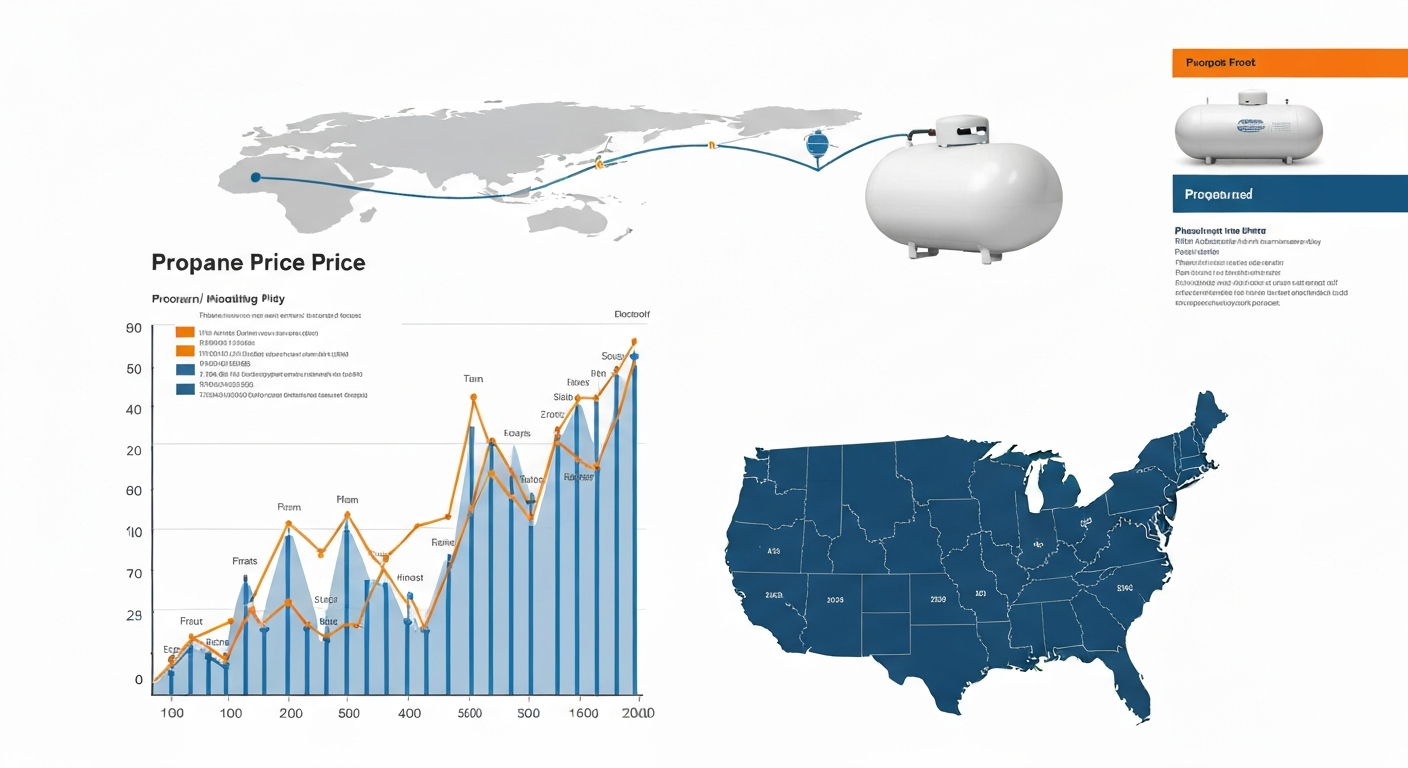
Despite global market shifts, domestic propane production continues to hold strong, suggesting a more stable supply outlook for the coming season. However, regional pricing remains dynamic, with states like Oregon, Utah, and Connecticut seeing localized cost variations that impact retail margins and customer pricing strategies.
The Facts
Shale Revolution's Enduring Impact LP Gas magazine recently forecasted the industry through 2035, noting that the 'shale gas revolution' will continue to provide plentiful domestic production. This abundance is expected to keep propane supply costs flat or even declining over the next decade. This is positive news for marketers grappling with other inflationary pressures. The U.S. Energy Information Administration (EIA) regularly updates on gasoline and diesel fuel, offering broader context for the energy market.
Export Capacity vs. Domestic Inventory RBN Energy highlights the complex interplay of supply dynamics, particularly how exports balance with domestic inventories. While exports are crucial for market balance, current constraints at the dock have resulted in 'extremely high' propane inventories. This can translate to favorable purchasing conditions for domestic distributors, but also underscores the need to monitor future export capacity carefully.
Regional Price Disparities Despite national trends, local pricing remains a key challenge. PropaneCostPerGallon.com reports specific 2026 prices for states like Oregon, Utah, and Connecticut, emphasizing that the '80% rule' for tank fills is a federal safety requirement (NFPA 58) and not a supplier markup. These regional breakdowns are vital for understanding local market competitiveness and setting appropriate retail prices. The EIA's 'Today in Energy Daily Prices' offers insights into broader commodity market volatility, including crack spreads, which can affect NGL pricing.
Business Impact
High domestic inventories can be a double-edged sword: lower wholesale purchase prices offer margin opportunities, but also signal potentially softer demand or oversupply. Propane companies must carefully manage inventory, especially given regional price variations. Leveraging market intelligence to anticipate local price fluctuations and optimize purchasing can significantly impact profitability. Long-term contracts or flexible pricing strategies become crucial to navigating these dynamics effectively and ensuring stable, competitive offerings for customers.
Key Data Points
- Shale gas revolution to keep propane supply costs flat/declining through 2035 (LP Gas).
- U.S. propane inventories are 'extremely high' due to export constraints (RBN Energy).
- EIA provides daily updates on energy prices and market dynamics.
- Oregon, Utah, Connecticut show varying 2026 retail propane prices (PropaneCostPerGallon.com).
Key Takeaways
- Domestic shale gas production promises stable, potentially declining, wholesale propane costs.
- High U.S. propane inventories offer purchasing advantages, but export capacity remains a factor.
- Regional pricing differences demand localized market analysis and flexible retail strategies.
- The '80% rule' for tank fills is a safety mandate, not a pricing tactic, and customers should be educated on it.
Action Steps
- 1Access EIA data and RBN Energy analyses for the latest market intelligence on NGLs and propane.
- 2Review and adjust pricing models to account for regional variations and inventory levels.
- 3Educate customers on the '80% rule' to build trust and transparency.
- 4Explore options for hedging or long-term supply contracts to mitigate price volatility.
Competitive Advantage
Companies that can effectively forecast supply and pricing trends, adapting quickly to regional market dynamics, will gain a significant competitive edge. Providing customers transparent pricing and explaining safety standards like the 80% rule builds trust and loyalty, differentiating your business from competitors.
With high inventories, what strategies are you deploying to optimize your purchasing and maintain competitive retail pricing for your customers this season?