
Regulatory & Policy
North Carolina Issues Stop-Sale on Refillable Propane System, Emphasizing Compliance Urgency
Regulatory Watch: New Stop-Sale Order Signals Heightened Scrutiny
Executive Summary
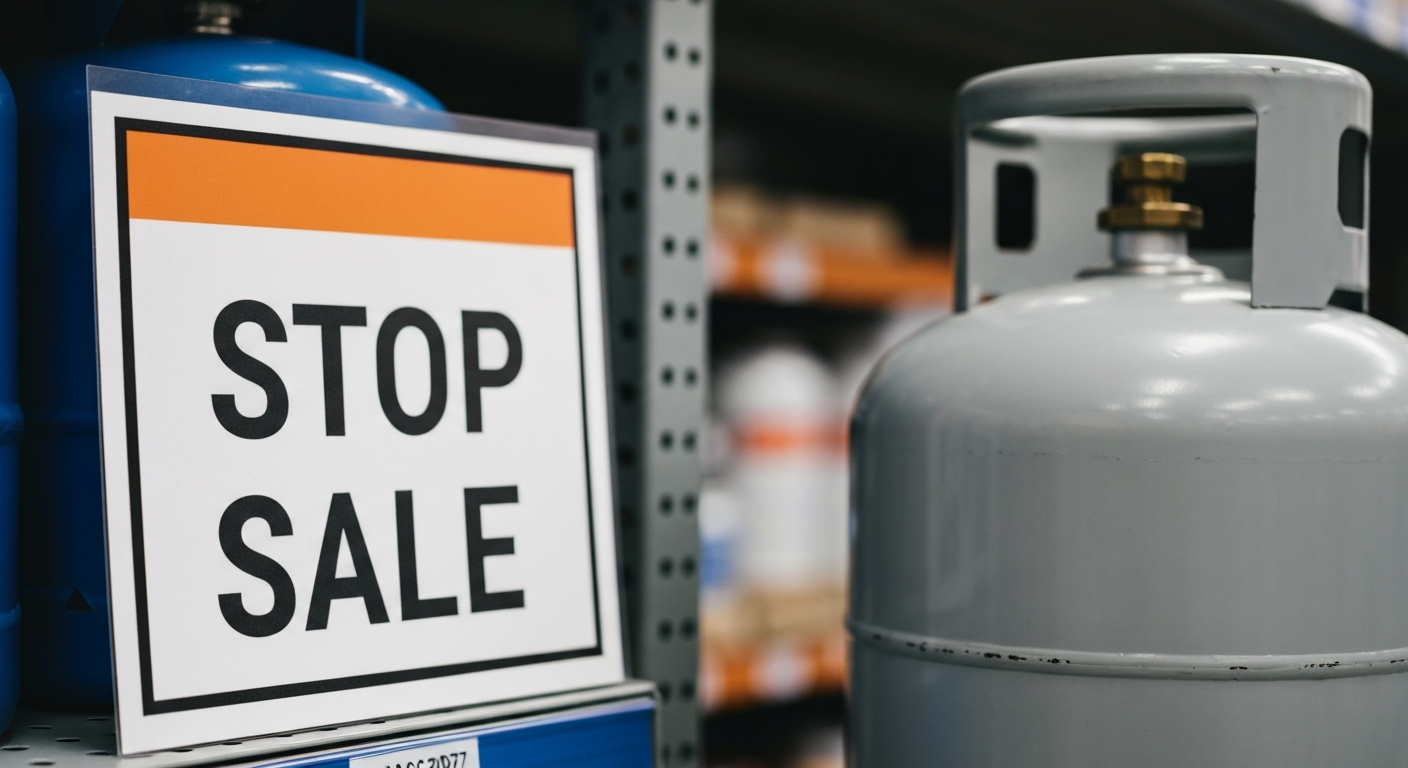
North Carolina issued a stop-sale order for the Ignik TapRack 4 Refillable Propane System due to a lack of proper third-party safety certification. This move signals heightened regulatory enforcement and emphasizes strict adherence to NFPA 58 and statutory requirements for all propane equipment.
The Situation
North Carolina's Department of Agriculture and Consumer Services has issued a stop-sale order for the Ignik TapRack 4 Refillable Propane System, citing non-compliance with state safety statutes. This action, reported by the Richmond Observer, highlights increasing regulatory scrutiny on propane equipment and underscores the critical need for all products to meet recognized third-party testing standards.
The Facts
Non-Compliance Triggers State Action The N.C. Department of Agriculture and Consumer Services (NCDA&CS) acted swiftly to halt sales of the Ignik TapRack 4 Refillable Propane System. The core issue, as detailed by Columbus County News, was the product's failure to secure approval from a recognized third-party testing laboratory—a requirement under North Carolina General Statute Chapter 119-58(a)1. This strict adherence to safety standards is paramount, especially for refillable systems that see repeated use by consumers.
NFPA 58: The Unifying Standard The NCDA&CS explicitly states its responsibility to maintain minimum general safety standards by adopting NFPA 58 “Liquefied Petroleum Gas Code” as the required standard (Title 02 NCAC Chapter 38 Section 0.0701). This code covers the design, construction, location, installation, and operation of equipment for handling, storing, and utilizing LP-Gas. The stop-sale order serves as a powerful reminder that claims of certification, if not backed by verifiable third-party approval, are insufficient.
Implications for Distributors and Retailers For propane delivery companies and retailers, this event is a crucial signal. It means increased vigilance is required when stocking or recommending any propane-related equipment, particularly those directly handled by consumers. The onus is on distributors to ensure that the products they sell or service are not just marketed as safe, but are legally compliant with all state and national safety codes.
Business Impact
The financial and legal ramifications of selling or servicing non-compliant equipment can be substantial. Beyond fines and product recalls, businesses face severe liability risks if an incident occurs involving a non-certified product they distributed. This can lead to costly lawsuits, reputational damage, and even loss of operating licenses. Implementing robust vendor vetting processes and verifying all product certifications is a critical defense. Companies should consider leveraging internal digital systems, perhaps even through fuelsite.pro's comprehensive suite, to manage product compliance documentation and ensure adherence to ever-evolving regulatory mandates.
Key Data Points
- NCDA&CS issued a stop-sale on Ignik TapRack 4 for non-compliance with NCGS 119-58(a)1.
- The product lacked approval from a recognized third-party testing laboratory.
- NFPA 58 is adopted by NC as the standard for LP-Gas equipment safety.
- Non-compliance can lead to fines, product recalls, lawsuits, and reputational damage.
- Distributors are responsible for verifying the certification of products they sell/service.
Key Takeaways
- Regulatory bodies are actively enforcing safety standards for propane equipment, requiring verifiable third-party certifications.
- Selling or servicing non-compliant products carries significant legal and financial risks for propane businesses.
- Adherence to NFPA 58 is a foundational requirement, underpinning state-level statutes for LP-Gas safety.
- Propane companies must implement rigorous vendor vetting and product verification processes to ensure compliance.
Action Steps
- 1Review all propane equipment currently sold or serviced to confirm proper third-party certifications.
- 2Establish a strict vendor vetting process that requires proof of NFPA 58 compliance and other relevant certifications.
- 3Educate sales and service teams on the legal implications of non-compliant equipment.
- 4Stay informed about local and state regulatory updates regarding propane equipment standards and enforcement actions.
Competitive Advantage
Companies that proactively ensure complete regulatory compliance across all products and services build an unimpeachable reputation for safety and reliability. This commitment not only mitigates significant business risks but also fosters deep customer trust, setting them apart in a competitive market.
What steps is your company taking to verify the safety certifications of all propane-related products you offer or service?
Get the next one in your inbox.
Free propane industry news, twice a week. 32,000+ operators already read it.
No spam, unsubscribe anytime. We'll email you a link to confirm — that's how we keep the list real. See our privacy policy.