
Weather & Supply
La Niña Strengthening — Winter Outlook Spells Trouble for Tight Inventories
NOAA: Brace for Cold — La Niña Winter Incoming
Executive Summary
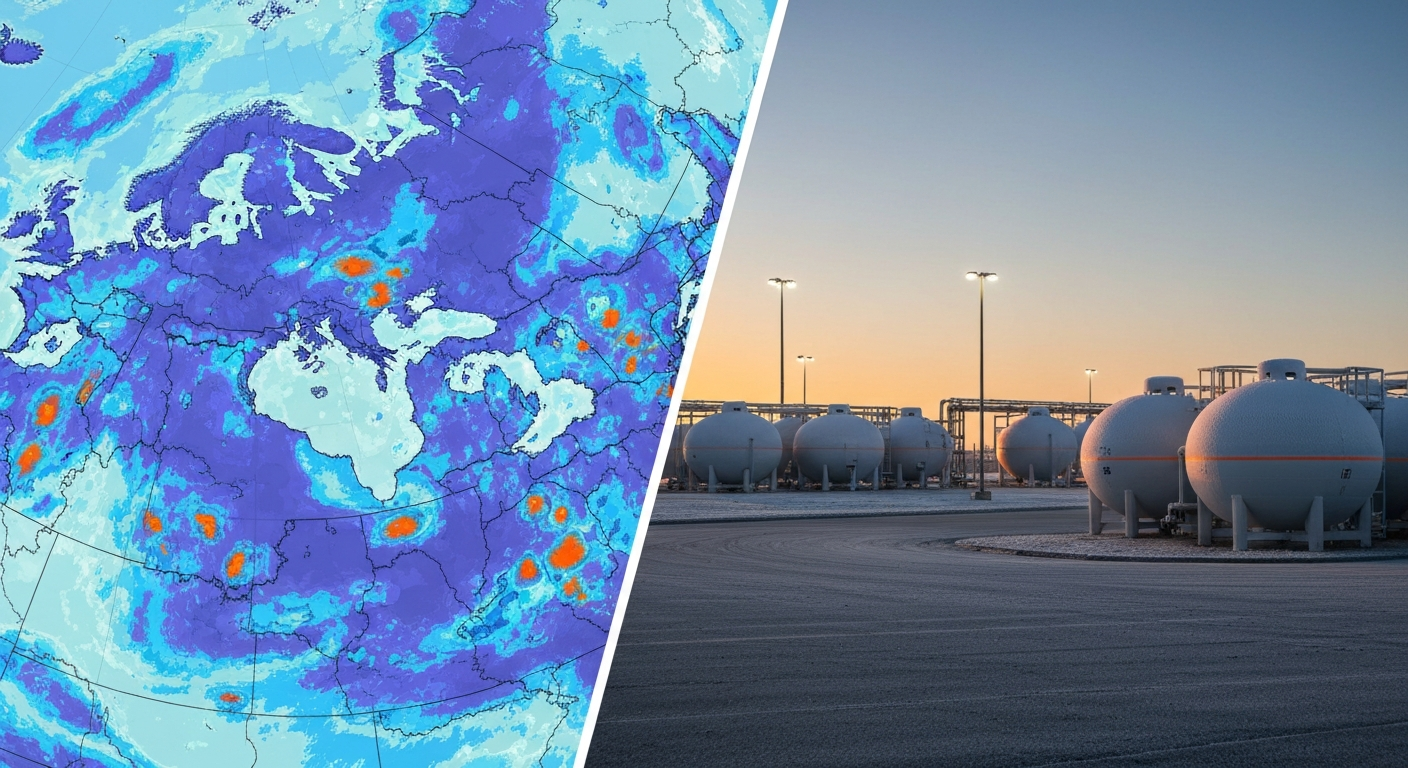
There's a 60% chance of a colder-than-normal winter. Storage is below average, and pre-buy volumes are surging 15%. Finalize supply contracts now.
The Situation
The National Oceanic and Atmospheric Administration (NOAA) projects a 60% probability of above-average heating degree days (HDDs) across northern tier states this winter. The La Niña ENSO index has hit −1.2 and is projected to deepen to −1.5 by October — a historical correlation with 8-12% above-normal HDDs in the heaviest propane markets.
The Facts
### The Weather Signal
NOAA's Climate Prediction Center issued its preliminary outlook this week, indicating a 60% confidence in above-average heating degree days (HDDs) — the highest early-season signal since 2022. The current La Niña at −1.2, projected to deepen, correlates strongly with colder winters in the Upper Midwest and interior Northeast.
### Inventory Position: Thin
Conway hub storage currently sits at 78% of capacity, compared to the 85% five-year average. Inventory builds are running 15-20% below their seasonal pace, largely due to record exports. Meanwhile, pre-buy contract volumes are already 15% above last year. As one Minnesota marketer put it, "After 2014 and 2021, we don't play chicken with La Niña."
Business Impact
A 10% increase in HDDs translates to 12-15% more gallons delivered. For a retailer selling 1 million gallons annually, this means an additional product cost of $107,000-$133,000 at current spot prices. If spot prices hit $1.10 during a cold snap, that cost could jump to $132,000-$165,000. Companies without firm trucking contracts also risk 40-60% surcharges during peak demand periods.
Key Data Points
- NOAA: 60% chance of colder winter (highest since 2022).
- La Niña ENSO: −1.2, projected to reach −1.5 by October.
- Conway storage: 78% capacity (vs. 85% average).
- Pre-buy volumes: Up 15% year-over-year.
- Cold-snap spot risk: $1.00–$1.10/gallon.
Key Takeaways
- Don't let two mild winters create complacency — a La Niña at −1.2 is a serious indicator.
- Storage levels offer a thin margin for sustained cold temperatures.
- Pre-buy windows are closing faster than usual this year.
- Secure firm trucking commitments well before December.
Action Steps
- 1Finalize winter supply contracts within the next 2-3 weeks.
- 2Secure firm transportation commitments for November through March.
- 3Model customer demand using +10% and +15% HDD scenarios.
- 4Push pre-buy and budget plan options to customers before September.
Competitive Advantage
Proactive winter preparation outreach — such as a customer letter explaining the weather data and recommending pre-buy options — positions you as a trusted advisor while competitors remain silent.
Are you buying aggressively now or waiting for October data? What's your trigger point for securing winter supply?
Get the next one in your inbox.
Free propane industry news, twice a week. 32,000+ operators already read it.
No spam, unsubscribe anytime. We'll email you a link to confirm — that's how we keep the list real. See our privacy policy.