
Market & Pricing
US Propane Production Surges, Yet Prices Climb: Unpacking the Market Anomaly
Record Production, Rising Prices: A Propane Paradox
Executive Summary
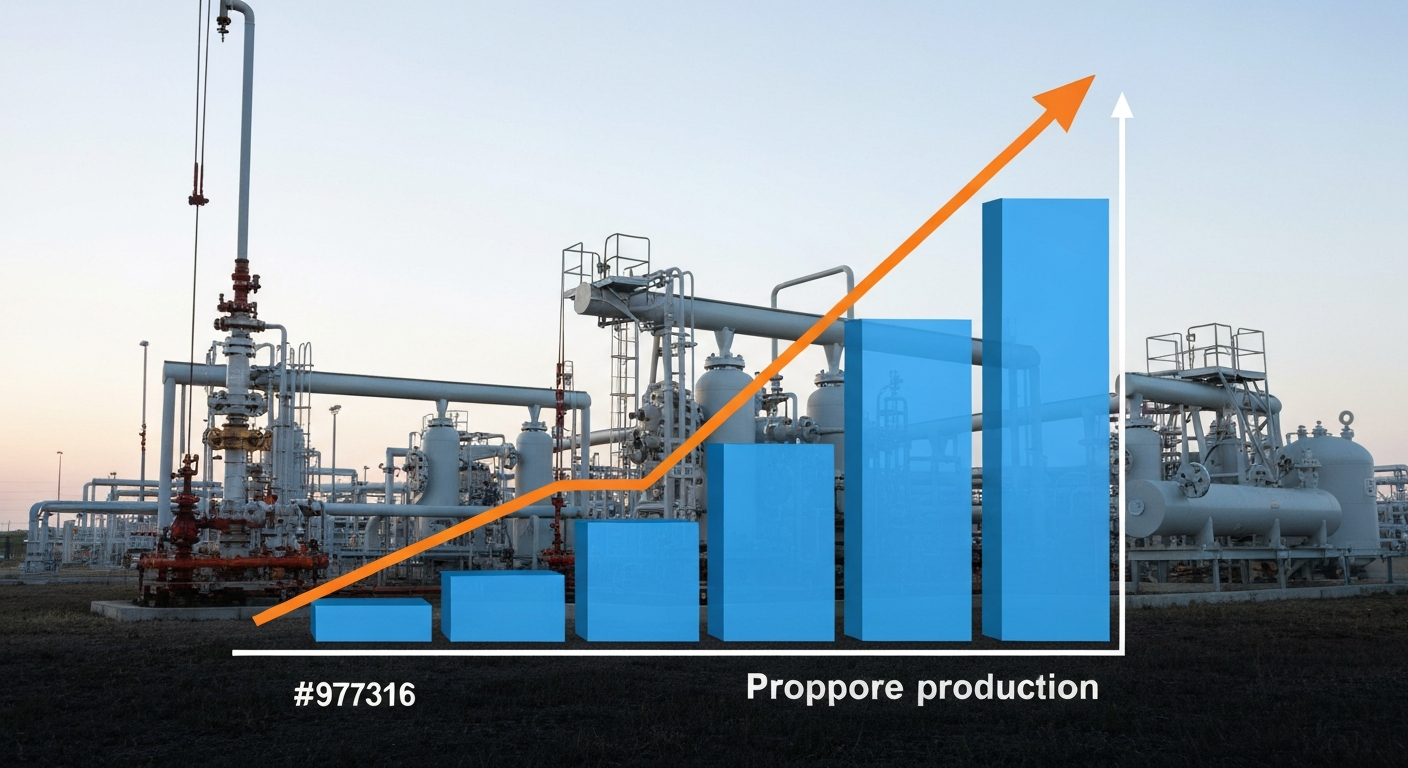
U.S. propane production recently hit a record 3 million bpd, leading to high inventories. Despite ample supply, propane prices are rising, driven by factors beyond domestic fundamentals, creating strategic challenges for distributors.
The Situation
The U.S. propane market is facing a paradox: record-high production topping 3 million barrels per day (bpd) alongside elevated inventories. Despite this abundant supply, prices are on an upward trend. This disconnect challenges conventional supply-and-demand wisdom, forcing propane companies to rethink their forecasting and procurement strategies.
The Facts
Recent reports from *LP Gas Magazine* and RBN Energy confirm a significant milestone: U.S. propane production has exceeded 3 million barrels per day. This surge, primarily driven by robust natural gas processing, has led to record-high propane inventories. "With that kind of supply/demand imbalance, it is not surprising that propane inventories are at record highs," notes *LP Gas Magazine*. However, this abundance hasn't translated to lower prices.
Global Dynamics at Play "Propane prices have been up recently, but it has nothing to do with propane fundamentals," according to *LP Gas Magazine*. This indicates that while domestic supply is strong, global market dynamics—particularly demand from international markets and the price of crude oil—are exerting upward pressure. Increased exports and growing petrochemical demand, especially from Asia's new propane dehydrogenation (PDH) capacity, mean a significant portion of U.S. production is headed overseas.
Regional Tightness Persists Despite national surpluses, regional supply tightness can still occur due to transportation bottlenecks or localized demand spikes. RBN Energy highlights that while overall inventories are elevated, "PADD 1 supply remains tight," illustrating how national trends don't always reflect local market realities. This complexity makes strategic planning crucial for distributors.
Business Impact
For family-owned propane companies, this market anomaly means navigating heightened price volatility even with stable supply. The challenge isn't availability, but cost management. Businesses must develop sophisticated procurement strategies that account for global price drivers, not just domestic inventory levels. Hedging strategies become more critical, and efficient inventory management is paramount to minimize holding costs while ensuring supply. Diversifying revenue streams, potentially into on-demand gasoline and diesel services via blinkfuel.com, could also buffer against propane-specific price shocks.
Key Data Points
- U.S. propane production exceeds 3 million bpd.
- Record-high domestic propane inventories reported.
- Propane prices are rising despite abundant supply.
- Global petrochemical demand and exports influence pricing.
- Regional PADD 1 supply remains tight.
Key Takeaways
- Record U.S. propane production does not guarantee lower domestic prices.
- Global demand and crude oil prices are key drivers of current propane price increases.
- Regional supply tightness can persist despite national inventory surpluses.
- Sophisticated procurement and risk management strategies are essential for distributors.
Action Steps
- 1Re-evaluate procurement contracts, considering global market indicators.
- 2Implement robust inventory management systems to optimize carrying costs.
- 3Explore hedging options to mitigate price volatility risks.
- 4Analyze regional supply chain vulnerabilities and develop contingency plans.
Competitive Advantage
Companies that can accurately predict and adapt to these complex market dynamics, moving beyond simple supply-demand models, will secure better pricing and maintain supply stability. This foresight translates into superior customer service and enhanced profitability, creating a significant competitive edge.
Given record production and rising prices, what new metrics or indicators should propane companies prioritize to forecast market trends effectively?
Get the next one in your inbox.
Free propane industry news, twice a week. 32,000+ operators already read it.
No spam, unsubscribe anytime. We'll email you a link to confirm — that's how we keep the list real. See our privacy policy.