
Safety & Compliance
Cigarette Sparks Horrific Minivan Propane Explosion in Virginia
Propane Minivan Explosion: A Stark Safety Reminder
Executive Summary
A minivan explosion in Virginia, caused by a propane leak ignited by a cigarette, critically injured one and highlighted severe safety risks. This incident demands immediate review of cylinder transport protocols and awareness of odorant limitations.
The Situation
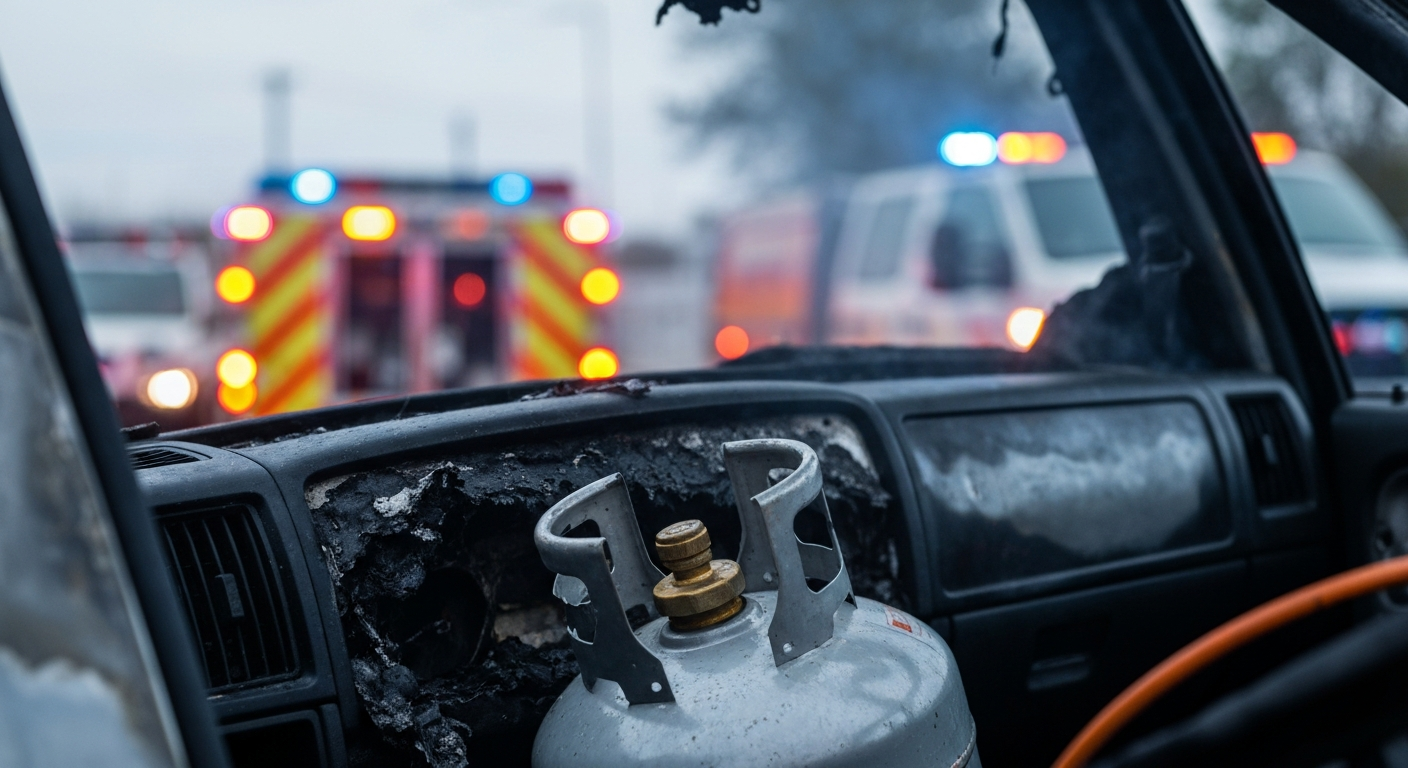
A tragic incident in Fairfax County, Virginia, saw a woman severely injured and a minivan destroyed after a lit cigarette ignited propane leaking from a cylinder inside the vehicle. The explosion, which rattled nearby homes, underscores the critical dangers of transporting propane cylinders improperly and the catastrophic consequences of ignition in confined spaces.
The Facts
Fairfax County Fire and Rescue reported that on April 10, 2026, a woman lit a cigarette, triggering a massive explosion in her minivan. Preliminary investigations confirmed a propane cylinder inside the vehicle was leaking. The blast was powerful enough to shake homes in Burke, Virginia, and sent the driver to the hospital with significant injuries.
Odorant Limitations & Confined Spaces Industry experts note that while propane is odorized with ethyl mercaptan, the smell can be difficult to detect in certain conditions, or if a person has a diminished sense of smell (e.g., due to smoking). In a sealed environment like a vehicle, even a small leak can quickly create an explosive atmosphere. This incident serves as a stark reminder of NFPA 58 guidelines regarding cylinder transportation, which emphasize ventilation and securing cylinders upright to prevent tipping and potential valve damage. The propanesafetypro.com platform offers modules specifically addressing safe handling and transport of propane cylinders, which could be critical for preventing such incidents.
Business Impact
For propane delivery companies, this incident reinforces the absolute necessity of customer education on safe propane handling and storage. Companies could face liability if customer negligence is tied to insufficient safety instruction. Investing in comprehensive safety campaigns, providing clear usage and transportation guidelines, and ensuring drivers are trained to recognize and report unsafe customer practices are not just good practice, but crucial risk mitigation. The cost of a single incident, both in terms of human life and potential legal repercussions, far outweighs the investment in robust safety programs.
Key Data Points
- Minivan explosion in Fairfax County, VA on April 10, 2026.
- Caused by propane leak from cylinder ignited by a lit cigarette.
- Driver hospitalized with significant injuries.
- Explosion rattled homes in the Burke, VA area.
- Highlights dangers of improper propane cylinder transport and confined space ignition.
Key Takeaways
- Customer education on safe propane cylinder transport is paramount to prevent catastrophic accidents.
- Odorant limitations and confined space risks must be emphasized in safety communications.
- Propane companies should proactively reinforce NFPA 58 guidelines for cylinder handling.
- Robust safety training and documentation protect both customers and businesses from liability.
Action Steps
- 1Review and update customer safety literature on cylinder transport and storage.
- 2Mandate refresher training for all personnel on customer safety protocols and incident reporting.
- 3Consider digital safety checklists for customer sites to document adherence to best practices.
- 4Launch a social media campaign emphasizing safe cylinder handling for residential customers.
Competitive Advantage
Companies that prioritize proactive customer safety education and implement digital tools to track compliance not only reduce their risk exposure but also build a reputation as a trustworthy and responsible provider, setting them apart in a competitive market. Utilizing systems like tankspotter.com can ensure safety protocols are logged and followed.
Beyond traditional safety brochures, how can our industry leverage modern technology to effectively communicate critical propane safety messages to every customer?
Get the next one in your inbox.
Free propane industry news, twice a week. 32,000+ operators already read it.
No spam, unsubscribe anytime. We'll email you a link to confirm — that's how we keep the list real. See our privacy policy.